
Quantum Technologies Overview
We are just getting started in this HUGE and evolving landscape.

This first intro piece provides an overview of technologies in the quantum space with a focus on physical quantum hardware, underlying “how it works” stuff, and quantum sensing technologies. We will touch on policy issues as well. In future posts we will explore other technological and policy domains in more detail.
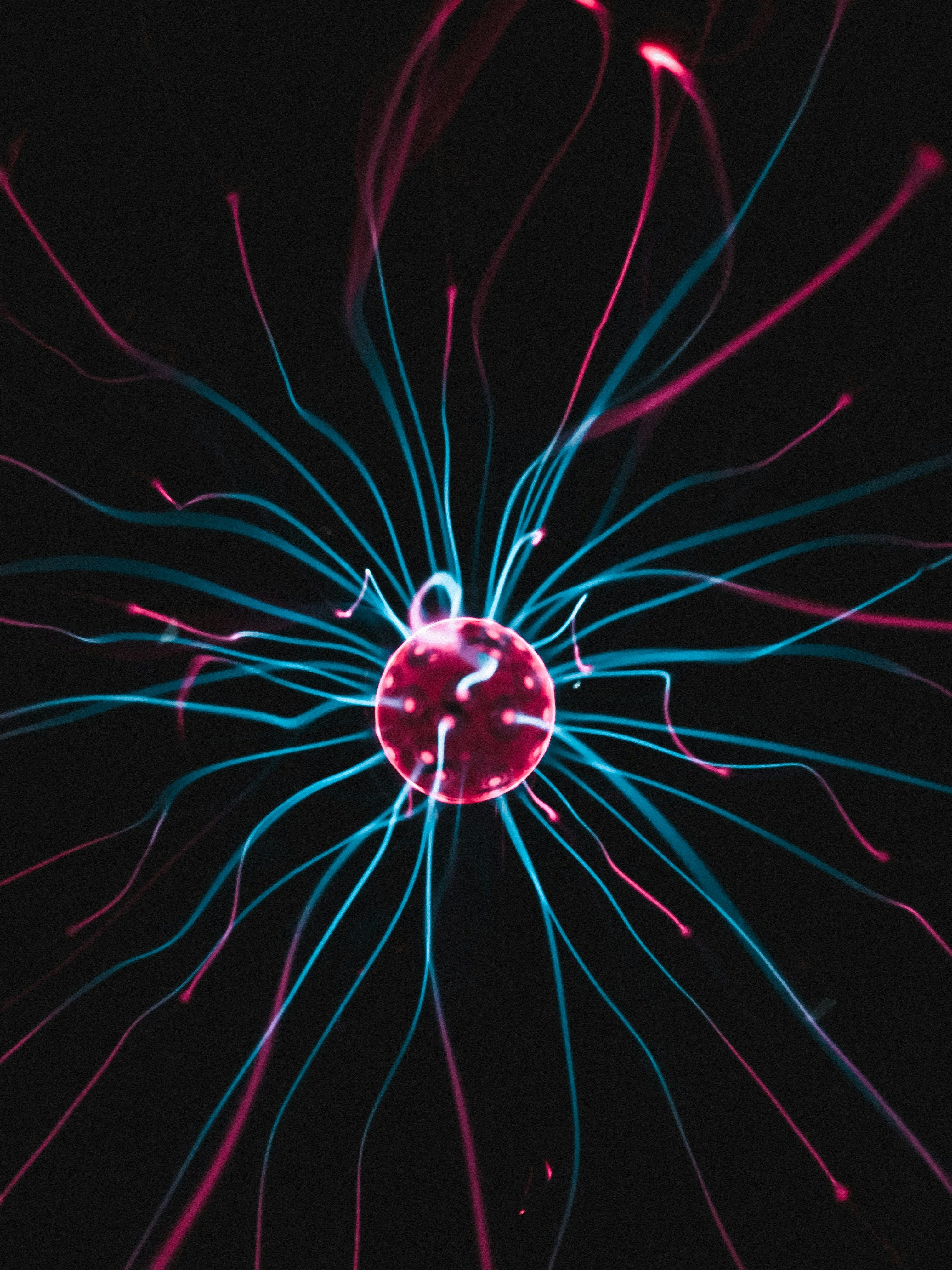
At its core, Quantum Computing seeks to harness the unique qualities of quantum mechanics to solve problems beyond the ability of the most powerful classical computers we use today.
While Quantum Computing tends to get the lion’s share of attention. IMO, it’s more comprehensive to think of the Quantum space as an eco-system of inter-related technologies and/or disciplines consisting of hardware, cryogenic systems, control electronics, algorithms, and quantum interconnects to link chips and modules. Beyond the technology, concerns and issues related to access/control, IP protection, standards/collaboration and issues of national and economic security are rapidly surfacing and are beginning to be discussed/debated.
How does it work - What the heck is a Qubit?
The basic unit of information in quantum computing is the qubit, or quantum bit. Qubits are essentially the quantum equivalent of the traditional bit used by classical computers to encode information. What makes qubits special is they can behave like a bit and store either a zero or a one, or a qubit can also be a weighted combination of zero and one at the same time (called superposition) which makes the scope of new possibilities massive. With superposition a qubit can be described as both 0 and 1, or as all the possible states between 0 and 1. Qubit probability is measured as a wave function which can be used to encode more than one bit of data enabling qubit based systems to carry out extremely complex calculations, extremely quickly, when combined with other qubits.
Quantum hardware can be built using different physical qubit platforms– here are the main types:
Superconducting qubits: Made from superconducting materials operating at extremely low temperatures that are manipulated by microwave pulses. These qubits are favored for their speed in performing computations and fine-tuned control.
Trapped ion qubits: Built using sophisticated laser technology to suspend individual ions in electromagnetic traps. These systems are noted for high-fidelity measurements, but they are much slower than superconducting qubits.
Photonic Qubits: Information is encoded by setting and measuring the directional spin states of individual light particles. Operating at room temperature these qubits are promising for quantum networking/communication and quantum cryptography as they can operate across long distances through optical fiber cables, but scaling remains a challenge.
Spin Qubits/Quantum Dots: Small semiconductors that capture a single electron and use it as a qubit. These systems are potentially compatible with existing semiconductor manufacturing technologies.
Neutral Atom Qubits: Commonly occurring neutral atoms are defined by a balanced positive and negative ionic charge and can be arranged by lasers in 3D arrays, enabling high connectivity for scaling.
Quantum Sensing is even more mature than quantum computing hardware
Quantum Sensors measure time, acceleration, rotation, and local magnetic and gravity fields with atomic-level precision.
Their most promising application is providing reliable positioning, navigation, and timing (PNT) capabilities to determine locations, plan trajectories, and synchronize activities as an alternative to existing GPS based PNT systems which are highly vulnerable to disruption and compromise.
Quantum sensors are poised to deliver essential capabilities for defense/weapons systems, space technologies, and critical infrastructure with stable synchronization of telecom networks, power grids, and financial transaction systems. The Quantum Sensing market is projected to approach $1 billion by 2028.
Interconnects and scalability: As quantum systems scale from dozens to thousands or millions of qubits, inter-connectivity becomes a bottleneck. Interconnects seek to address scalability issues by connecting multiple chips or modules with photonic links or microwave “quantum buses” and involve several advanced technologies including cryogenic cabling and advanced packaging techniques.
Cryogenic Systems: Most quantum platforms—except photonic—need extreme cooling to “millikelvin temperatures”, near absolute zero (which is colder than outer space) to isolate qubits and prevent interference.
Error Correction Systems: Qubit systems are often described as “temperamental” or fragile and are highly susceptible to failure. Researchers are working hard to develop quantum error correction systems to stabilize quantum systems. This is a topic for a future post!
Policy Discussions – National and Economic Security
While it is no surprise that Quantum technologies promise vast economic gains in multiple sectors spanning cryptography, AI, finance, pharmaceuticals, transportation, crypto currencies and communications – to name a few. They also carry profound cyber security implications; the scope and nature of these implications are currently not fully understood. Multiple commentators are actively highlighting how quantum powered cyber threats such as cracking existing cryptographic systems could completely upend and re-balance global socioeconomic and political power dynamics.
Policy discussions are beginning to highlight that existing policy frameworks designed for semiconductors and AI models are not easily replicated and transferable to quantum systems. Policy frameworks will need support a balance between national and economic security concerns, technological leadership, IP ownership and the potential for export controls. Controls on quantum technologies will be super complex given that quantum technology supply chains are rapidly evolving and the fact that quantum manufacturing expertise is highly distributed and global in nature. Going forward I will flag developments on the policy front as a foundational topic in this series of posts.
Hopefully, you found this helpful. Please share your thoughts via the Comments section for this post or open a new SubStack chat thread … and by all means please forward this post to your friends and colleagues.